

Last updated October 17, 2026
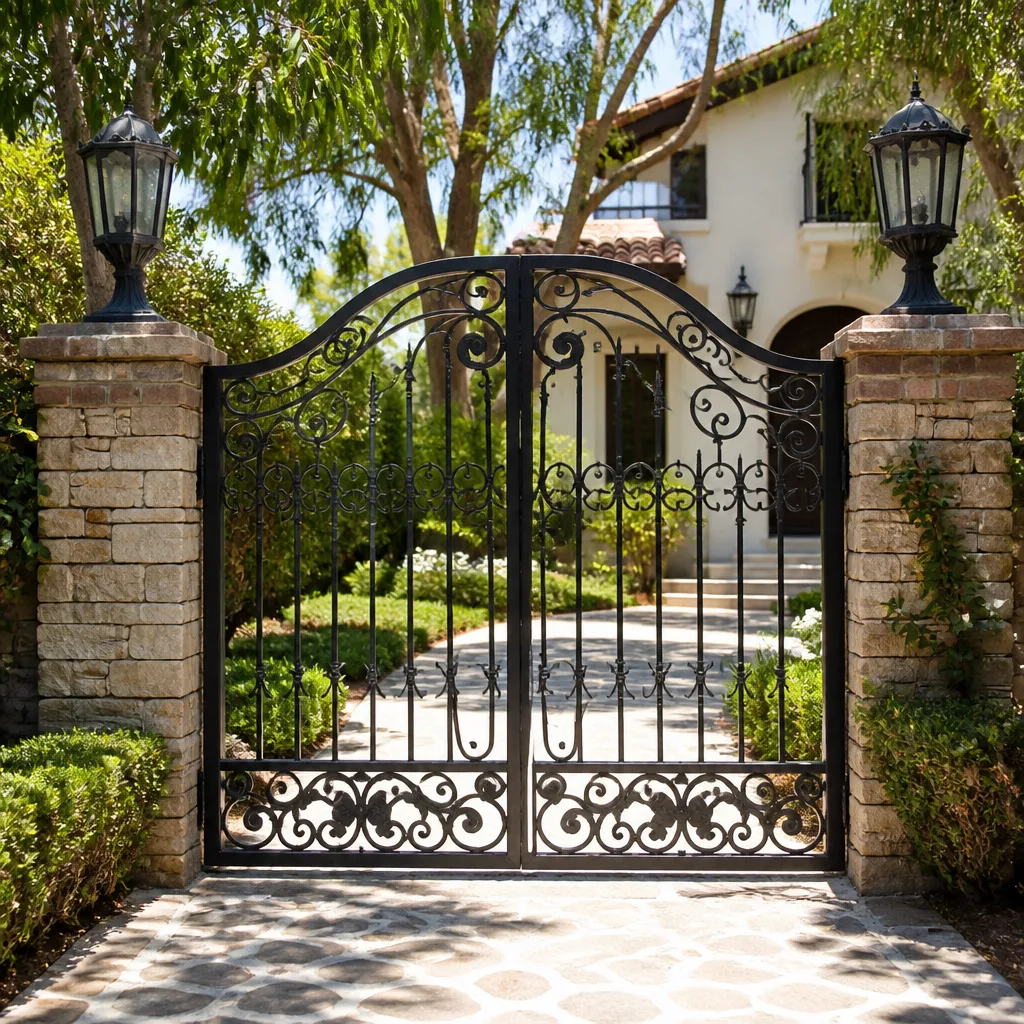 Wrought iron
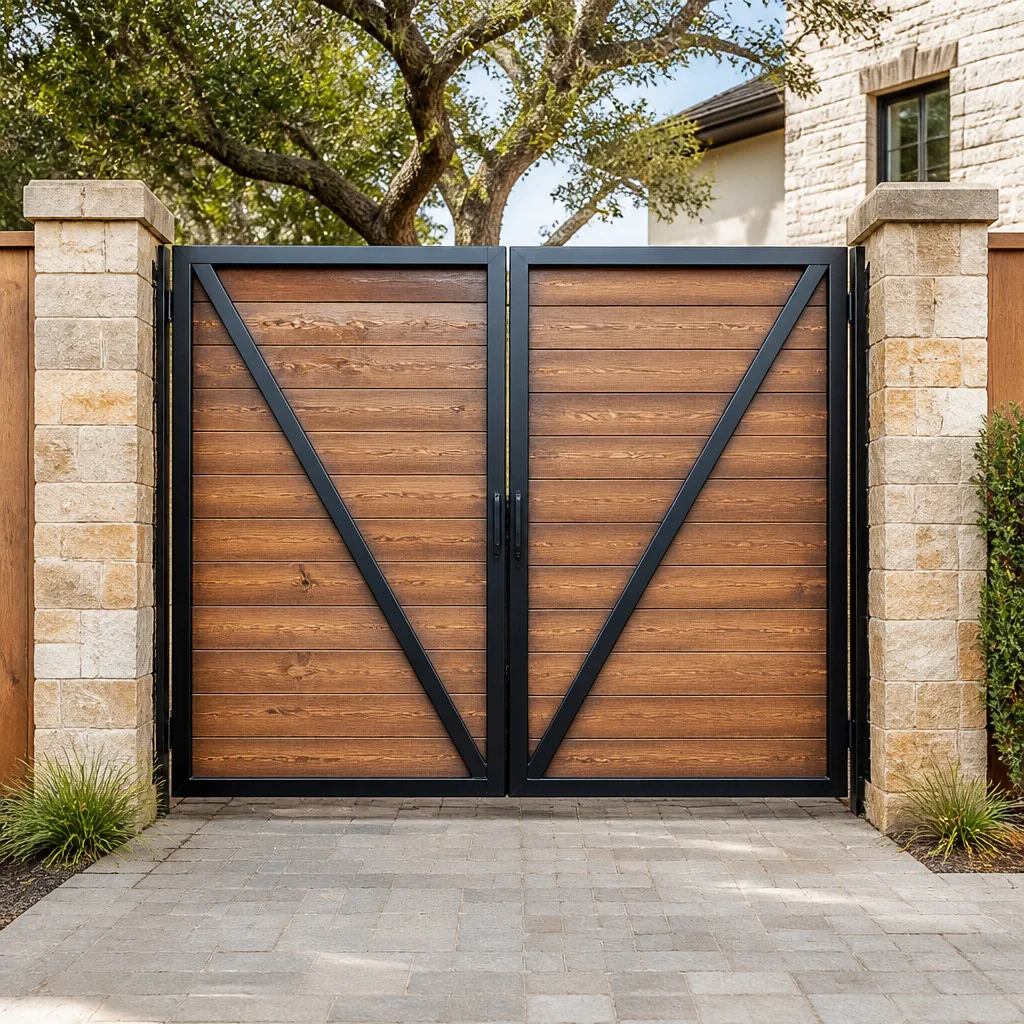 Wood & steel frame
 Farm & ranch
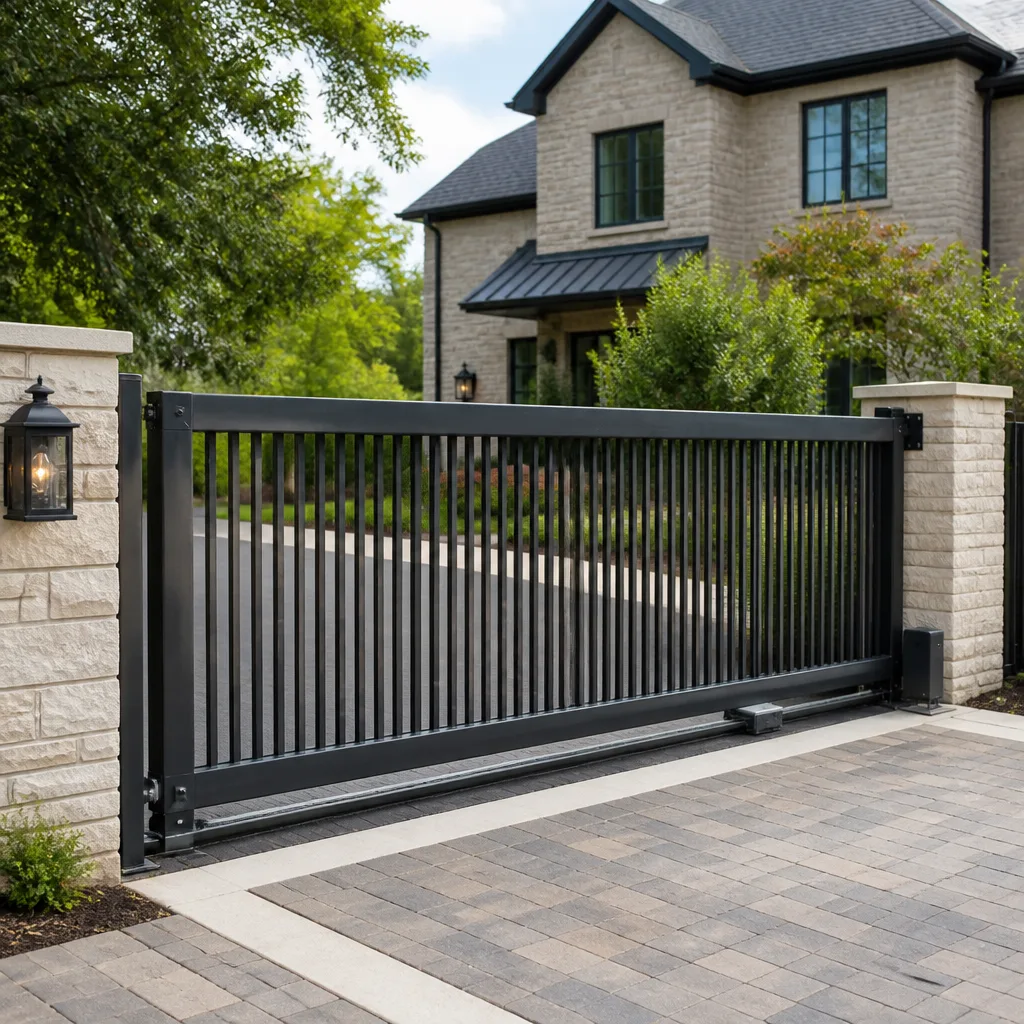 Sliding driveway gates
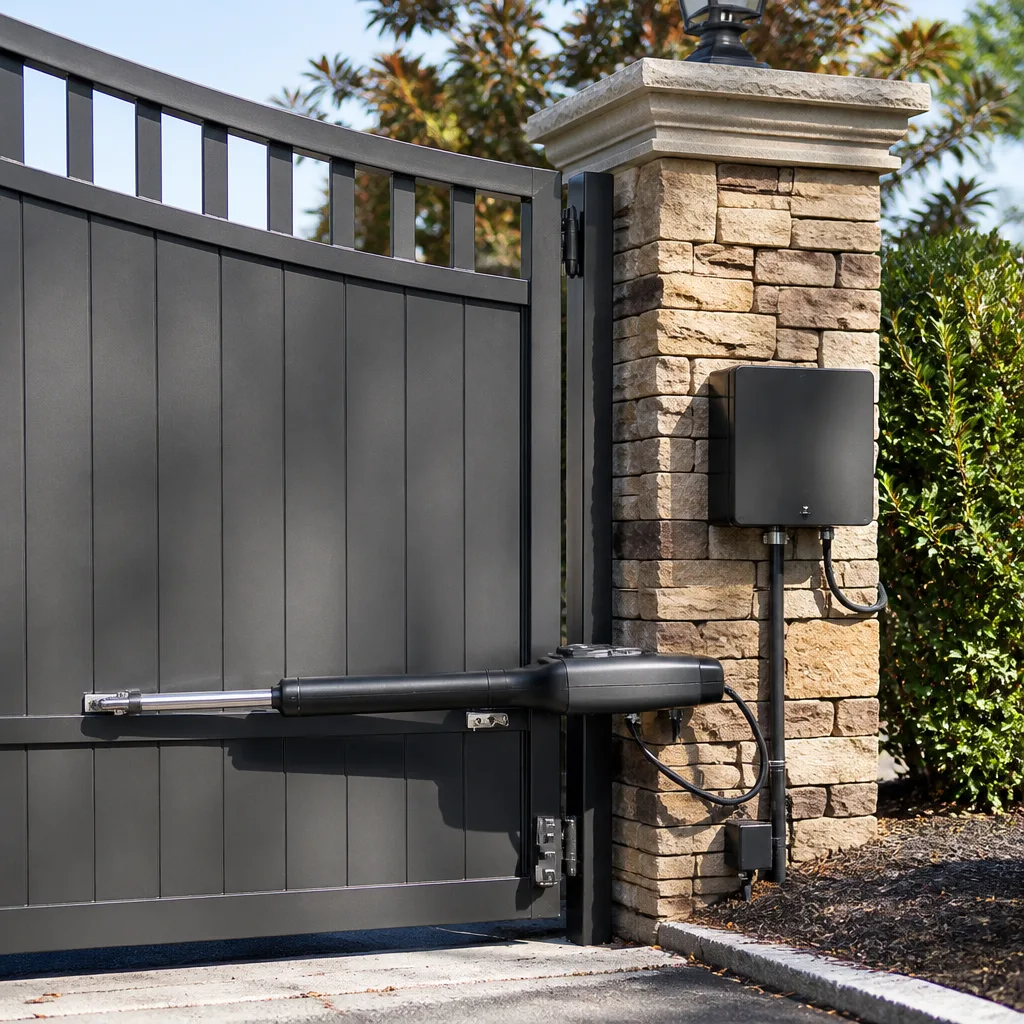 LiftMaster operators
Free on-site gate assessment - hinges, posts, and your LiftMaster or Nice gate operator checked before anything is quoted
The assessment is free and the quote is the invoice.
Get your free estimateGate Repair Maintenance Checklist for Henderson Homeowners
Most gate maintenance advice online was written for coastal climates where humidity is the enemy and rust is the slow creep. Henderson is different. Here, the fight is against 115°F pavement heat radiating up into hinge barrels, monsoon-driven microbursts slamming gates against their stops, and fine gypsum dust working its way into every pin and roller. A generic checklist that says “lubricate the hinges annually” leaves out the fact that the lubricant you choose matters more than the schedule. For more detail on local requirements, see our guide to Gate Repair Permits, Codes & Inspections in NV: What You Need to Know. This guide is a Henderson-specific maintenance routine: the right products, the right intervals, and the specific failure points we see on gates across Green Valley, Anthem, Seven Hills, and Inspirada. You’ll learn what to check monthly, what to photograph, and when a thirty-second inspection can prevent a $400 repair.
Quick Answer
A Henderson gate maintenance routine should include monthly latch and hinge inspections with dry PTFE spray or white lithium grease, quarterly checks of gate post plumb using a bubble level and of all mounting bolts for thermal loosening, and an annual deep service of tension springs, drop rods, cane bolts, and operator limits. In Henderson’s heat, use dry lubricants that don’t attract dust, and after monsoon season, re-check every post for lean. For electric gates, test the safety reverse and battery backup every quarter.
Styles & brands we work with
Table of Contents
- The Monthly Checklist: Five Minutes That Prevent Most Repairs
- Henderson-Specific Lubricant Guide: What to Use and What to Skip
- The Quarterly Checklist: Bolts, Plumb, and Thermal Cycling
- After Monsoon Season: The Post-Plumb Protocol Henderson Actually Needs
- The Annual Deep Service: Springs, Drop Rods, and Cane Bolts
- Electric and Automated Gate Maintenance: Safety Edges, Limits, and Batteries
- What to Photograph and Document Before Calling a Technician
- What Preserves vs. Voids the 365-Day Done Right Promise
The Monthly Checklist: Five Minutes That Prevent Most Repairs
We’ve been providing Gate Repair services in Henderson long enough to know the pattern: a homeowner notices a gate is dragging, pushes it harder for a few weeks, and then the hinge weld tears or the post cracks. The monthly check is designed to catch the dragging before it becomes a weld job. It takes five minutes and almost no tools.
- Lift the gate by the latch side. If it lifts more than 1/8 inch, the hinge bushings or the post mount is wearing. A gate that moves up and down is transferring stress into the hinge welds every time it swings.
- Check the latch pin alignment. Look at the strike plate on the post. If the latch pin is hitting the edge of the strike plate rather than dropping cleanly in, the gate has shifted. This is the single most common cause of latch failure we see in Henderson, and it’s almost always caught before the latch breaks if you look monthly.
- Listen while you swing the gate. Open and close it twice. A smooth gate is nearly silent. A grinding or squealing sound means metal-on-metal contact somewhere, usually a dry hinge barrel or a worn roller.
- Look at the ground clearance. Walk the full arc of the gate. If any point dips below 2 inches from the ground, the gate has sagged. In Henderson’s decomposed granite and gravel yards, a sagging gate catches on the ground and slowly torques the hinges.
- Test the drop rod if you have one. A double gate with a drop rod should have the rod sliding freely into its ground sleeve. Sand and dust from Henderson’s dry washes work into the sleeve and seize it. A drop rod that won’t drop leaves one gate leaf loose, which puts all the wind load on the other leaf’s hinges.
If any of these five checks fails, write down what you observed and call us. A gate repair in Henderson that’s caught at the “latch pin is off by a quarter inch” stage is a thirty-minute fix. Caught six months later, it’s often a new hinge weld and a re-hung gate.
Henderson-Specific Lubricant Guide: What to Use and What to Skip
This is where the generic “annual lubrication” advice falls apart in Henderson. The wrong lubricant in this climate does more damage than no lubricant at all. The heat isn’t just hot; it’s sustained. A July afternoon where the pavement reads 150°F with an infrared thermometer bakes a wet lubricant dry in a week. And when it dries, it leaves a sticky film that captures the fine dust that blows through every Henderson neighborhood.
Here’s what actually works here, broken down by component:
- Latch pins and strike plates: Use a dry PTFE spray. It goes on wet, flashes off in a minute, and leaves a slick polymer film that doesn’t hold dust. Reapply monthly during summer, every other month during winter. Do not use WD-40 here. WD-40 is a solvent that cleans and then evaporates, and in Henderson heat it leaves behind a residue that turns into a dust-capturing paste inside the latch mechanism. We open latches with that paste caked inside at least once a week.
- Hinge barrels: White lithium grease, applied sparingly. Work the gate back and forth after application so it distributes inside the barrel. In Henderson, we recommend a pea-sized amount per hinge every three months. More than that is unnecessary, and the excess will sling off or attract dust.
- Ball-bearing rollers on sliding gates: A lightweight machine oil like 3-in-1, not grease. Grease on rollers picks up granite dust from driveways and grinds the bearings. Oil flushes the dust out. Apply every two months during high-dust periods, which in Henderson is basically April through October.
- Tension springs and spring hardware: Dry PTFE spray, never grease. Grease on a tension spring is a magnet for the fine caliche dust common in older Henderson neighborhoods like Pittman and Whitney Ranch. You want those coils to slide against each other with zero friction, and grease plus dust creates the opposite.
- Chain drives on electric gates: Motorcycle chain lube or light machine oil, applied very sparingly. Henderson’s dust plus heavy chain lube produces a grinding paste that stretches the chain and wears the sprocket. Wipe the chain dry after applying.
One Henderson-specific note: if you live in a newer development near a construction area, like parts of Cadence or West Henderson, your dust load is higher than in an established neighborhood with mature landscaping. During construction seasons, move to the shorter end of every lubrication interval.
The Quarterly Checklist: Bolts, Plumb, and Thermal Cycling
Henderson gates live through a daily swing of 30 to 40 degrees between night and afternoon, plus the seasonal extremes from freezing-morning winter to 115-degree summer. Metal expands and contracts with every cycle. Bolts don’t loosen because they’re installed wrong; they loosen because the gate frame grows and shrinks slightly every single day, and over three months that’s 90 expansion cycles working against every fastener.
Your quarterly checklist addresses thermal cycling directly:
- Torque check every visible bolt. Walk the gate and the posts with a socket set. You’re checking that bolts are tight, not making them tighter. A bolt that won’t stay tight after a gentle re-tighten may have stripped its thread or wallowed out its hole; that’s a repair, not a maintenance item.
- Check the post caps. Lift or tap the caps on both hinge and latch posts. Loose post caps let water in during winter rains and monsoon downpours, and once water sits inside a steel post in Henderson’s summer, the post rusts from the inside out. You’ll never see it until the post fails at ground level.
- Inspect welds at the hinge points. Look for hairline cracks in the paint directly around welds. Paint cracks first, then the weld. In Henderson’s dry air, you’ll often see the paint crack long before the weld itself gives way, which makes this an excellent early warning.
- Test the self-closing hardware. If your gate has a spring closure, time it. The gate should close in 4 to 7 seconds without slamming. A faster close means the spring has loosened or the gate has lost weight, and a slam is what bends hinges.
- Run through the full swing arc slowly. Watch for changes in speed or a hitch in movement. A gate that suddenly swings easier or harder means something changed in the load path, and quarterly is the right interval to notice.
A quarterly routine takes about 20 minutes once you know where every bolt is. It’s the difference between catching a loose post anchor in September and finding the post leaning into the street after a January windstorm.
After Monsoon Season: The Post-Plumb Protocol Henderson Actually Needs
Henderson’s monsoon season runs roughly July through September, and while the total rainfall is modest by eastern standards, it arrives hard and fast. A quarter inch of rain in twenty minutes softens the topsoil around a gate post, and the microburst wind that comes with it pushes the gate hard enough to lever the post in the softened ground. This is why we get a wave of post-related repair calls every August and September in Henderson.
You need three things: a $3 bubble level, a straight edge or carpenter’s square, and a tape measure. Here’s the protocol:
- Wait until the first dry week after the last significant rain. Check the ground around the post first. If the soil is still soft or the post leaves a depression when you press the ground with your foot, wait another week. You need the ground to have settled before you can get a true reading.
- Place the bubble level vertically against the post on the hinge side, the latch side, and the face. You’re checking three planes. The post should read plumb, meaning the bubble sits centered, on all three.
- If the bubble is off center, measure how far. Place a straight vertical object, like a wooden yardstick, against the post and measure the gap at the top. If the post is out of plumb by more than 1/4 inch per foot of post height, the gate is now loading its hinges or its latch unevenly. For a standard 7-foot post, that means anything over roughly 1 3/4 inches of lean at the top is a real problem, but honestly, we start paying attention long before that.
- If the post reads more than 1/4 inch off per foot, stop using the gate and call a professional. A leaning post that keeps getting cycled is working its way out of the ground or cracking its concrete footer. This is not a DIY re-set. The fix involves digging out the footer or driving a sister post, and both require coordinating the gate’s weight and swing path.
- Check the gate’s latch alignment the day after a plumb correction. Even a small post adjustment changes where the latch pin lands. Expect to fine-tune.
For gates on the hillside lots common in Anthem and MacDonald Highlands, pay extra attention after monsoon. Runoff on a slope doesn’t pool; it flows, and it will wash out the soil on the downhill side of a post faster than you’d expect.
The Annual Deep Service: Springs, Drop Rods, and Cane Bolts
Once a year, usually in the fall before the wind season kicks up, we recommend a deeper service that goes beyond the visible fasteners. These are the components that wear slowly and fail suddenly, and the annual service is your chance to catch them in the slow-wear phase.
Tension springs. The coil springs on self-closing gates and the extension springs on older gate operators have a service interval. In Henderson’s temperature swings, a tension spring typically loses about 10% of its tension over 18 months. At the 2-year mark, the gate either doesn’t close fully or slams. The annual check means manually opening and closing the gate and having a second person hold it at several points in its arc. Any point where the gate either wants to run away or stalls is the spring telling you it’s done. Springs under tension are dangerous to remove without the right tools and experience; this is one of the components we recommend a technician handle.
Drop rods. The ground sleeve on a drop rod fills with sand over the course of a year in Henderson. Dig out the sleeve with a narrow trowel or shop vac, clean the rod, and apply dry PTFE spray before re-inserting. If the rod is bent, replace it rather than trying to straighten it, because a straightened rod will bend again under the first wind load.
Cane bolts. Cane bolts hold one leaf of a double gate closed. They get kicked, hit by mowers, and bent by kids climbing the gate. The annual check: fully raise and lower each bolt, confirm that the tip seats fully into its ground hole, and inspect the spring that holds it in the raised position. A cane bolt that doesn’t stay raised is a trip hazard and a bent-bolt waiting to happen.
Gate wheels and rollers. On single gates long enough to have a support wheel, like those on wide driveways in rural Henderson County, inspect the wheel’s axle and tire. A flat spot on the wheel means the gate sat in one position and the whole weight rested on one tiny contact patch through a hot summer. A flat-spotted wheel jerks every time the gate moves, and that jerk cracks welds upstream.
If any of these annual checks reveals wear that makes you uncertain, call before the component fails. We’d rather quote you a $60 spring replacement than a $600 hinge weld after the spring lets go mid-swing.
Electric and Automated Gate Maintenance: Safety Edges, Limits, and Batteries
Automated gates have their own maintenance needs, and Henderson’s heat is hardest on the electrical components. Circuit boards, transformers, and battery backups that live inside metal operator housings are sitting inside an oven from June through September. A housing in direct sun can reach 140°F even when the air temperature is only 108.
Here’s what to check quarterly on an electric gate repair in Henderson system, which also helps you avoid that repair altogether:
- Safety edge and photo eye test. Block the photo eye with your hand and attempt to close the gate. The gate should stop or reverse. Then press the safety edge if your gate has one while the gate is closing; same result. If either test fails, disconnect the operator and call us. A gate operator that closes on a person, a pet, or a car is a serious hazard, and the safety systems are there for a reason.
- Limit switch operation. Watch the gate close and stop. It should stop at the same point every time without slamming the stop or reversing. A gate that drives hard into its stop is bending its own frame, and in Henderson’s heat, hot metal bends faster.
- Battery backup check. Most Henderson electric gates have a battery backup for power outages. Disconnect the operator from wall power and trigger a full open/close cycle on battery. If the gate moves slowly or not at all, the battery is nearing end of life. Batteries in Henderson’s heat often fail in 2 to 3 years, not the 5 the manufacturer suggests.
- Operator housing ventilation. Look at the louvers or vents on the operator housing. If they’re blocked with dust or spider webs, clear them. Henderson’s dust can plug vents within one summer and trap the heat inside the housing.
- Chain or belt tension on sliding gates. A slack chain slaps against the rail and wears both. A too-tight chain overloads the motor. You’re looking for about a half-inch of deflection when you press on the chain with a finger.
If you have a Mighty Mule, LiftMaster, or DoorKing operator, these checks apply directly; the components may differ slightly in layout, but the functions are the same. We’re factory-trained on those brands so the first visit handles the actual issue rather than a guess.
What to Photograph and Document Before Calling a Technician
The best way to keep a gate repair visit short and a quote accurate is to send us documentation before we arrive. We get calls in Henderson every day where the homeowner says “it makes a noise,” and we show up to find the problem takes thirty seconds to diagnose but required a specific part that wasn’t on the truck. A few photos change that.
Here’s what to capture:
- The entire gate from the hinge side, standing back far enough to include both posts. This shows the overall geometry. A gate that looks fine in close-up is often visibly listing when you see the whole frame against the fence line.
- A close-up of each hinge. Top and bottom, both leaves if it’s a double gate. We can often identify a cracked weld or sagged bushing from a clear hinge photo.
- The latch and strike plate, with the gate both open and closed. The photo of the latch pin approaching the strike plate is the single most useful image you can send; it tells us whether the problem is the latch or the gate’s alignment.
- If it’s an electric gate, the operator model number. The metal plate on the side of the housing or the motor. Having the model number in advance means we arrive with the right parts for a LiftMaster versus a Mighty Mule versus a DoorKing.
- A video, ten seconds, of the gate moving. The noise, the stutter, the direction of the lean. Sound matters. A squeal is a dry hinge; a scrape is a dragging gate; a rattle is loose hardware. Ten seconds of video often replaces a 20-minute diagnostic.
- The area around the base of each post. Cracks in the concrete, gaps between post and footer, or displaced soil. This gives us early warning of a structural issue.
Send these before calling, or call first and send them while you’re on the line. Either way works. The goal is that when a Latch and Post technician arrives in Henderson, they already know what they’re dealing with, the part is on the truck, and the written price you get before any work starts reflects the actual job.
What Preserves vs. Voids the 365-Day Done Right Promise
Every repair and installation from Latch and Post Gate Repair Henderson home is covered by the 365-Day Done Right Promise. If the work isn’t right, we make it right. No argument, no fine print. But there are maintenance actions that preserve that promise and actions that can void it, and the line is usually about introducing new problems rather than maintaining what’s there.
What preserves the promise: Following the monthly and quarterly checks in this guide. Using the right lubricants. Documenting what you observe. Calling us when something changes rather than waiting. Keeping the gate and its components clean of debris. All of these keep the system in the condition we left it and let us honor the warranty for the full year, no questions.
What voids the promise: Re-welding a hinge or post yourself or through an unlicensed handyman. Moving a post. Replacing an operator circuit board with a non-approved part. Modifying gate hardware by drilling new holes in the frame or cutting the gate down. Any of these changes the load path and geometry we repaired, and at that point the work is no longer ours. Also voiding: using the wrong lubricant that gums up a latch we just rebuilt. That isn’t malicious, but it is outside the maintenance spec.
One Henderson-specific note: if you have a handyman install a shade sail or a cover over your gate area and it moves the operator, changes post loading, or blocks the photo eye, that’s a modification. We’re glad to come back and re-certify the work, but the original warranty doesn’t extend to changes we didn’t make.
For a full run-through of what a professional repair looks like, see our page on gate installation in Henderson, which walks through the full replacement path if repair is no longer the right option.
Common Mistakes to Avoid
- Using WD-40 on hinges and latches. It’s a solvent, not a lubricant, and in Henderson heat it evaporates quickly and leaves a sticky residue that captures dust. You’re making the wear worse, not better.
- Waiting until the gate is visibly sagging to check plumb. By the time you can see the lean from the street, the post has already been moving for weeks or months. The bubble level catches it earlier.
- Greasing tension springs. Grease on a spring attracts Henderson’s fine dust and creates a grinding paste between the coils. Dry PTFE is the right product, every time.
- Painting over cracks in post weld paint without inspecting the weld. The crack is the warning. Covering it with paint hides the failure point until the weld itself tears.
- Ignoring a gate that slams shut because it still latches. A slamming gate is transmitting shock into the hinge welds and post footer with every close. That’s how a $50 spring replacement eventually becomes a $600 structural repair.
- Letting the photo eye get dusty and then disabling it because it “keeps reversing.” Clean the lens. A disabled safety system is putting a closing gate on a child or pet, which is never worth the convenience.
See the difference
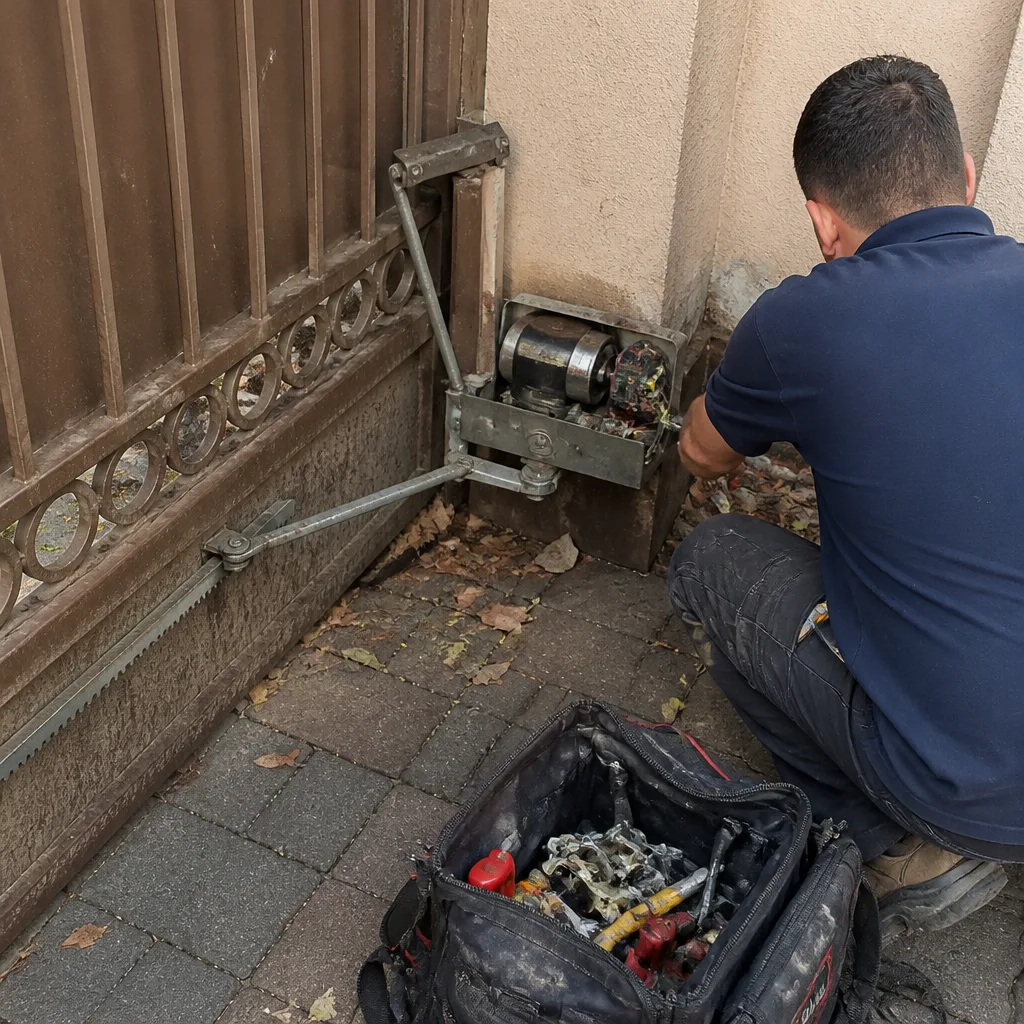 Before
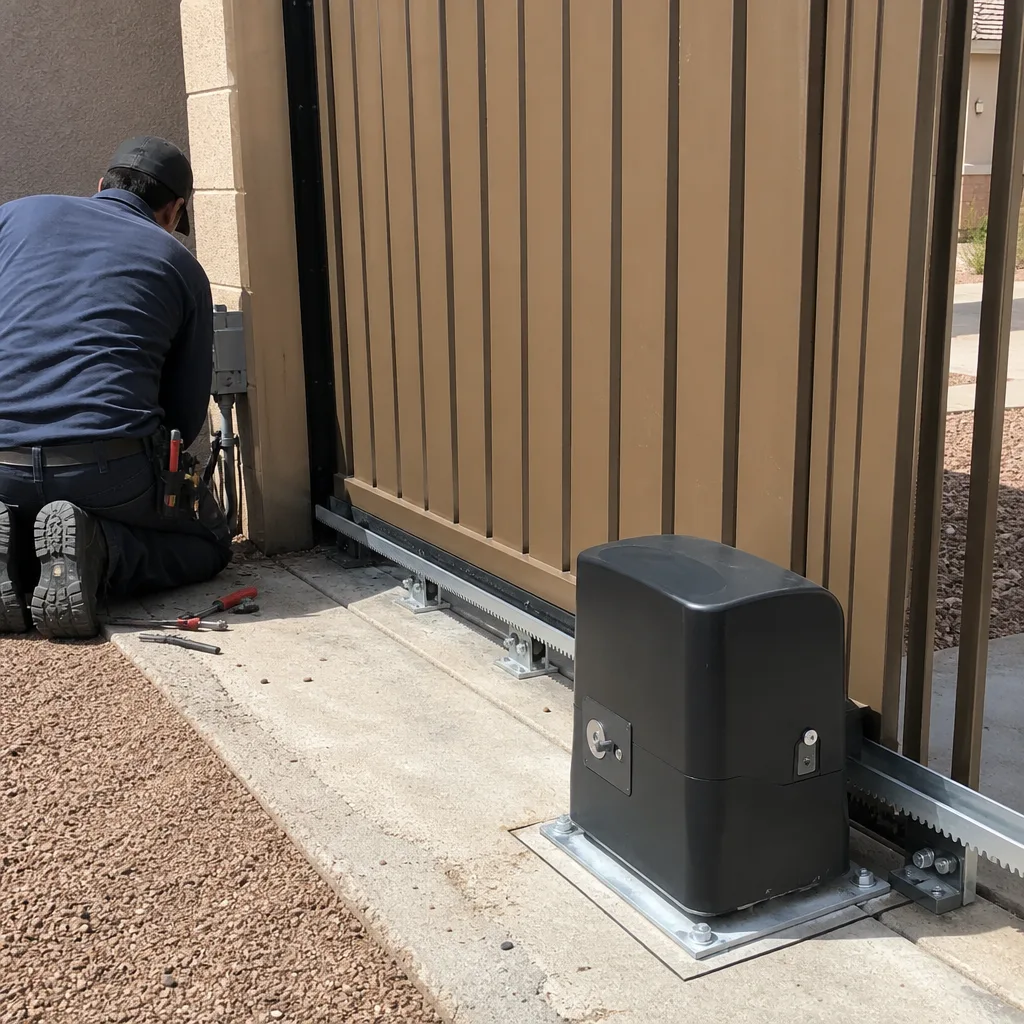 After
After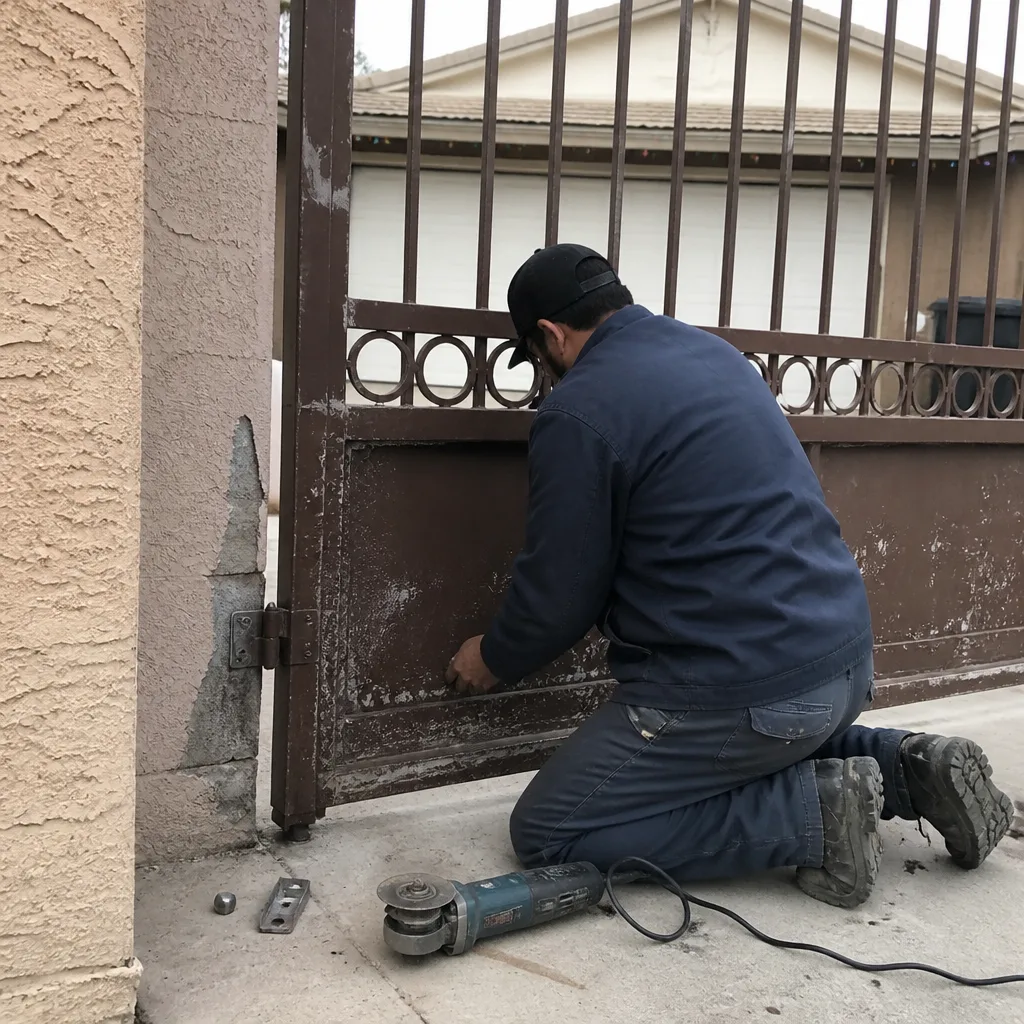 Before
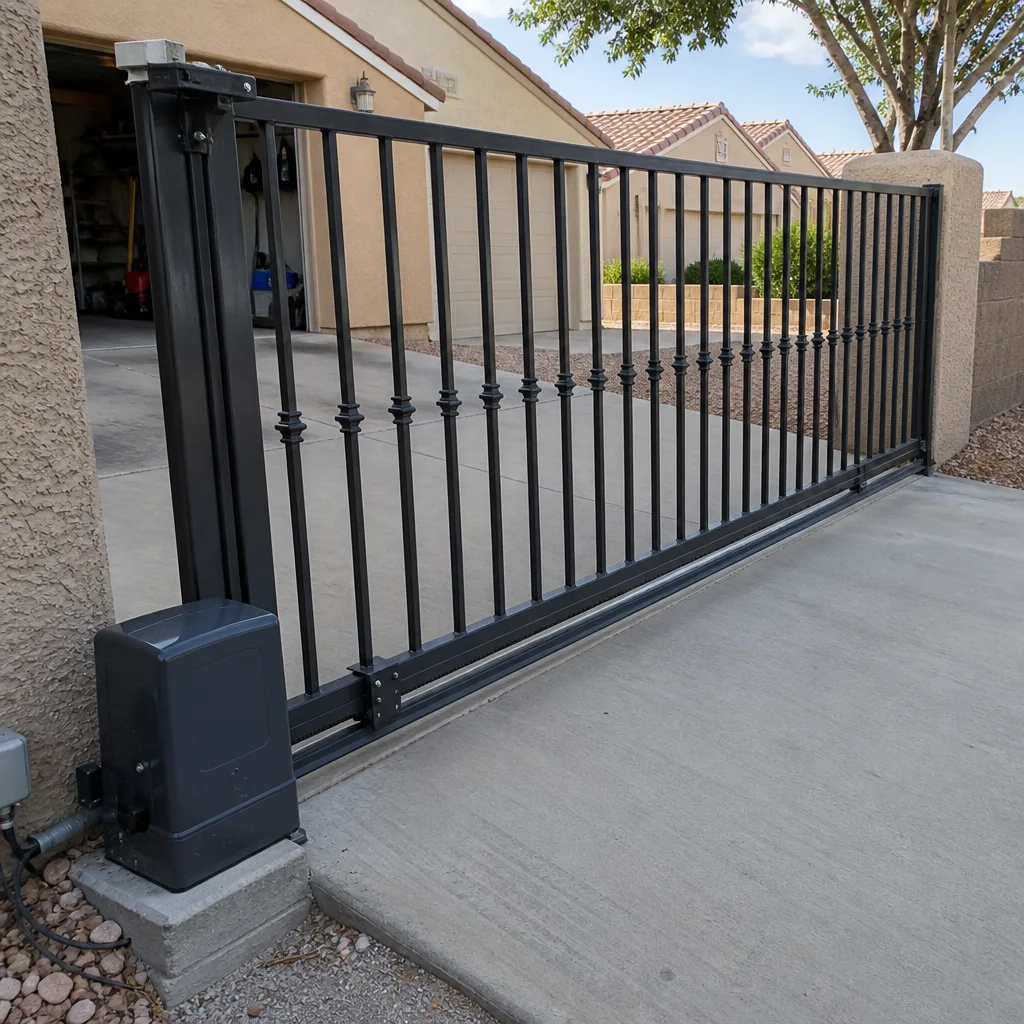 After
After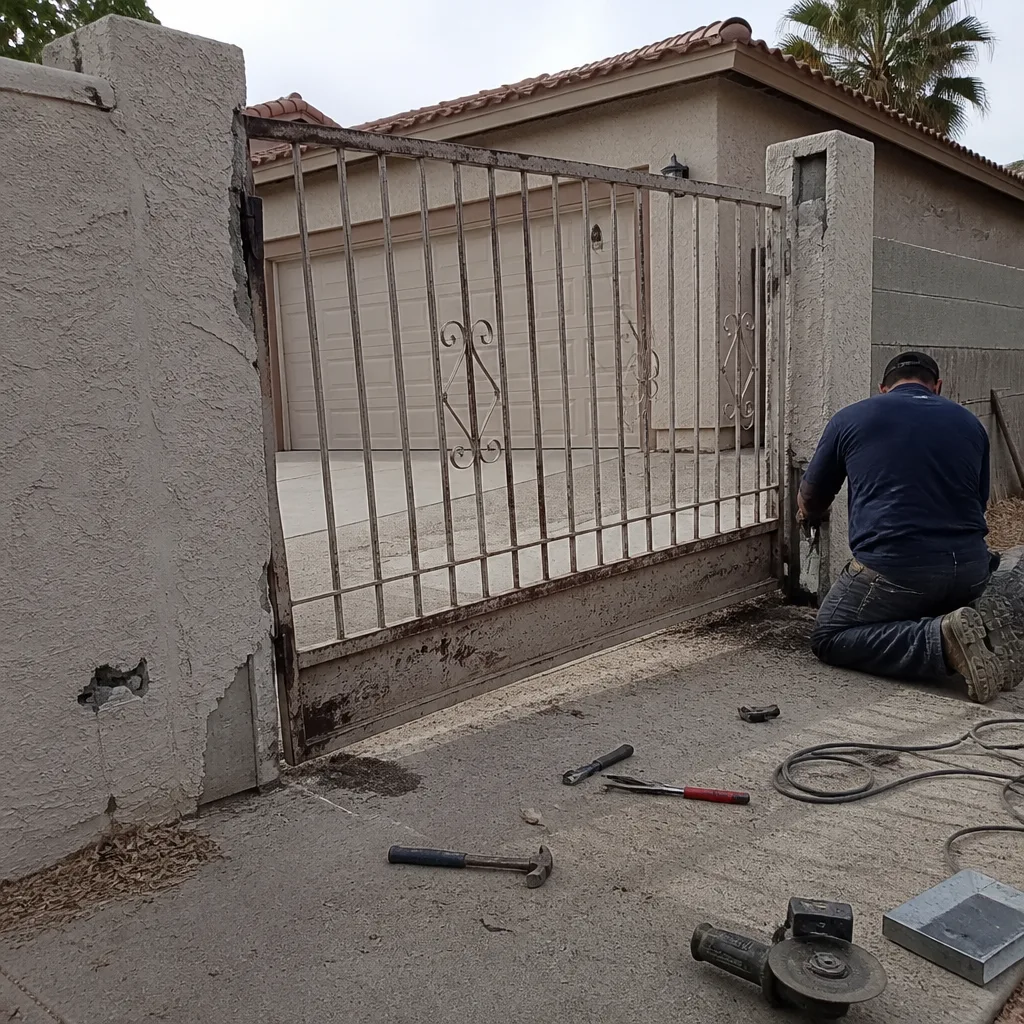 Before
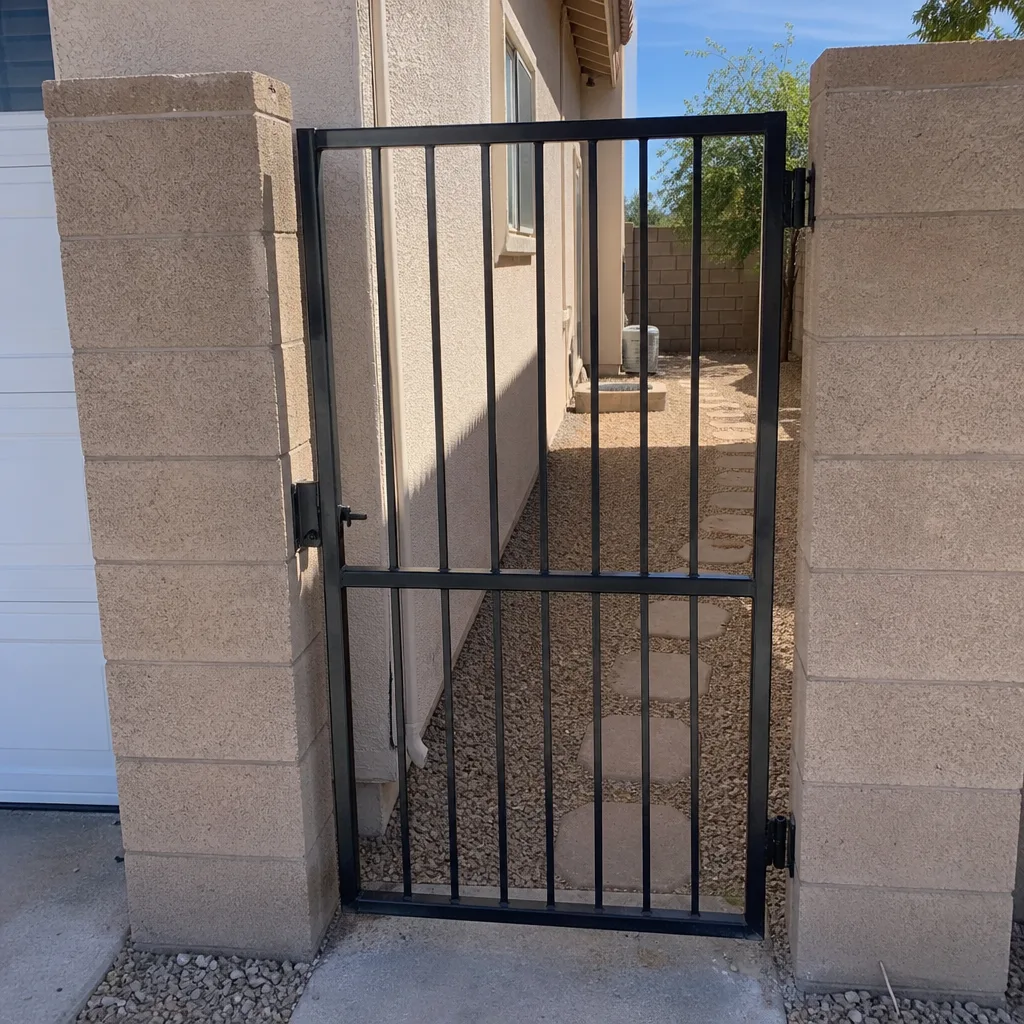 After
AfterWhen to Call a Professional
Some maintenance tasks in this guide, like lubricating a latch pin or photographing a hinge, are homeowner work. Some are not. Call a professional when a post is out of plumb by more than 1/4 inch per foot, when a tension spring has lost tension or you see any crack in a weld, when an electric gate fails its safety tests, or when you have a gate that’s dragging and you can’t find the cause. Tension springs under load and gates that could fall during disassembly are not worth the savings of a DIY attempt. Latch and Post Gate Repair Henderson offers free estimates in Henderson, and every visit includes a written price before any work starts. Call (775) 210-7739.
Frequently Asked Questions
Every three months, using white lithium grease sparingly on hinge barrels and dry PTFE spray on latch pins. In Henderson’s heat and dust, quarterly is the right interval; annual is not enough and monthly is usually overkill unless you live next to construction or open desert.
Dry PTFE spray for latch pins, tension springs, and drop rods, and white lithium grease for hinge barrels. Both hold up to Henderson’s heat without evaporating and without attracting the fine dust that accelerates wear. Avoid WD-40 on gate hardware entirely.
Place a bubble level vertically against the post on three faces: hinge side, latch side, and front. If the bubble is centered on all three, the post is plumb. If it’s off by more than 1/4 inch per foot of post height, the post has moved and the gate should not be used until it’s re-set.
Yes. Operator housings in direct Henderson sun reach 140°F or more, which shortens battery backup life, stresses circuit boards, and causes thermal expansion in chains and belts. Keeping the housing vents clear is the single most effective thing a homeowner can do.
Photograph the full gate from both sides, each hinge, the latch and strike plate with the gate open and closed, the operator model number if electric, and a ten-second video of the gate moving. Send these before or during your call to make the visit shorter and the quote more accurate.
Generally no. A leaning post means the footer has cracked, the soil has washed out, or the post has corroded below ground, and none of these are corrected by pushing or shimming. The gate’s full weight is carried by that post, and an improper re-set can fail without warning. Call (775) 210-7739 for a free estimate instead.
The Bottom Line
A Henderson gate lives a hard life: 115-degree afternoons, monsoon microbursts, daily thermal cycling, and dust that works its way into every moving part. The maintenance routine that handles those conditions isn’t the generic one from a national checklist. For more guides & resources tailored to Henderson homeowners, explore our blog.; it’s monthly latch and hinge checks with dry PTFE and lithium grease, quarterly bolt and plumb checks, a post-monsoon level check with a bubble level, and an annual deep service of springs, drop rods, and cane bolts. For electric gates, quarterly safety reversals and battery tests are non-negotiable. And when something moves, leans, cracks, or stops, you don’t have to guess. Call (775) 210-7739. A live person answers. We’ll give you a written price before any work starts, and every repair is covered by the 365-Day Done Right Promise.
Written by Cody Beckman, Owner at Latch and Post Gate Repair Henderson, serving Henderson since 2009.