

Last updated October 17, 2026
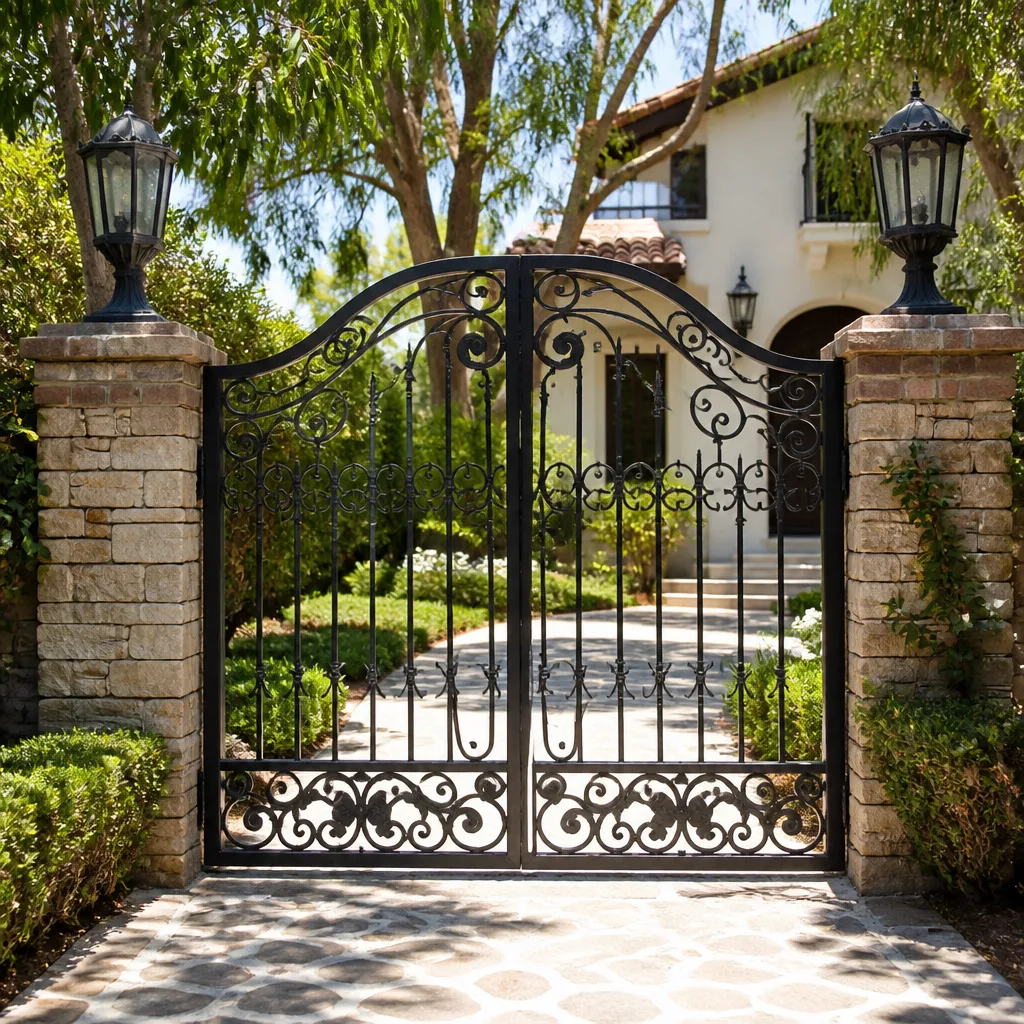 Wrought iron
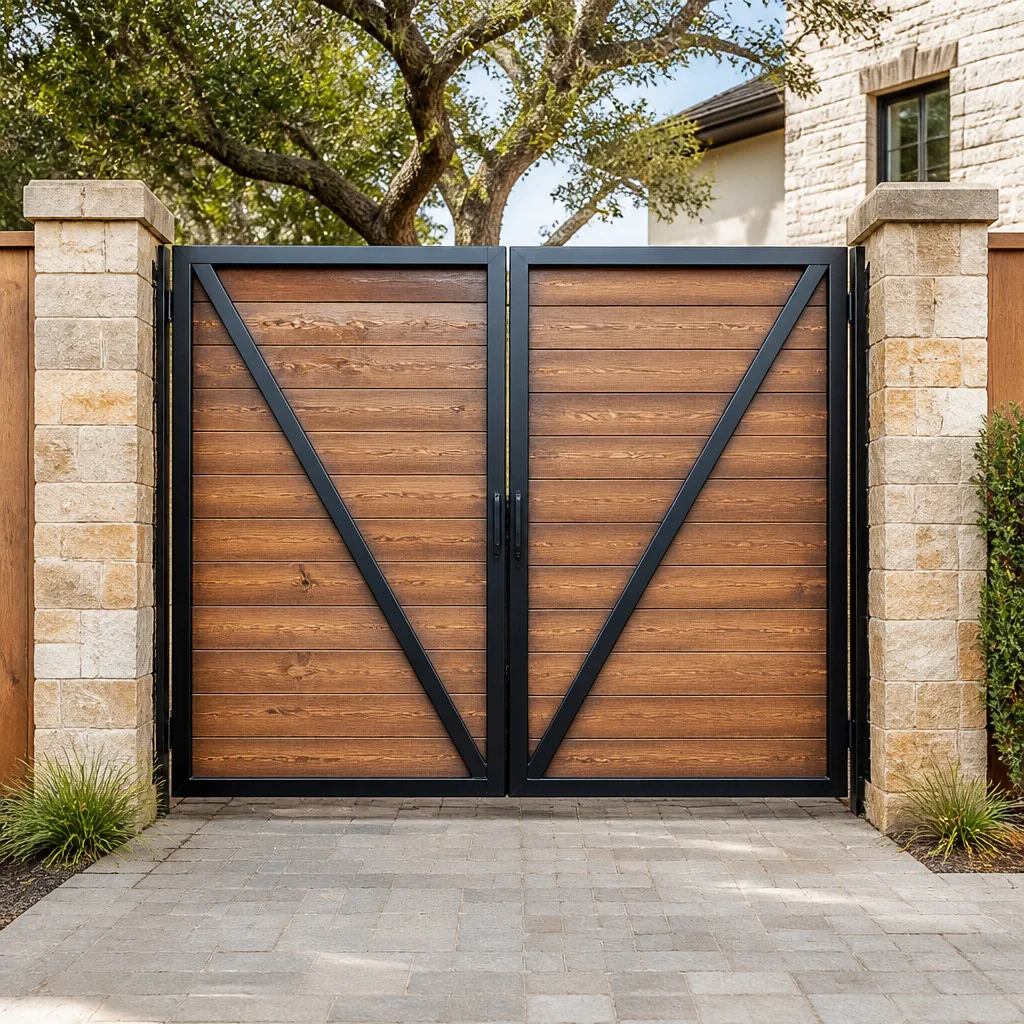 Wood & steel frame
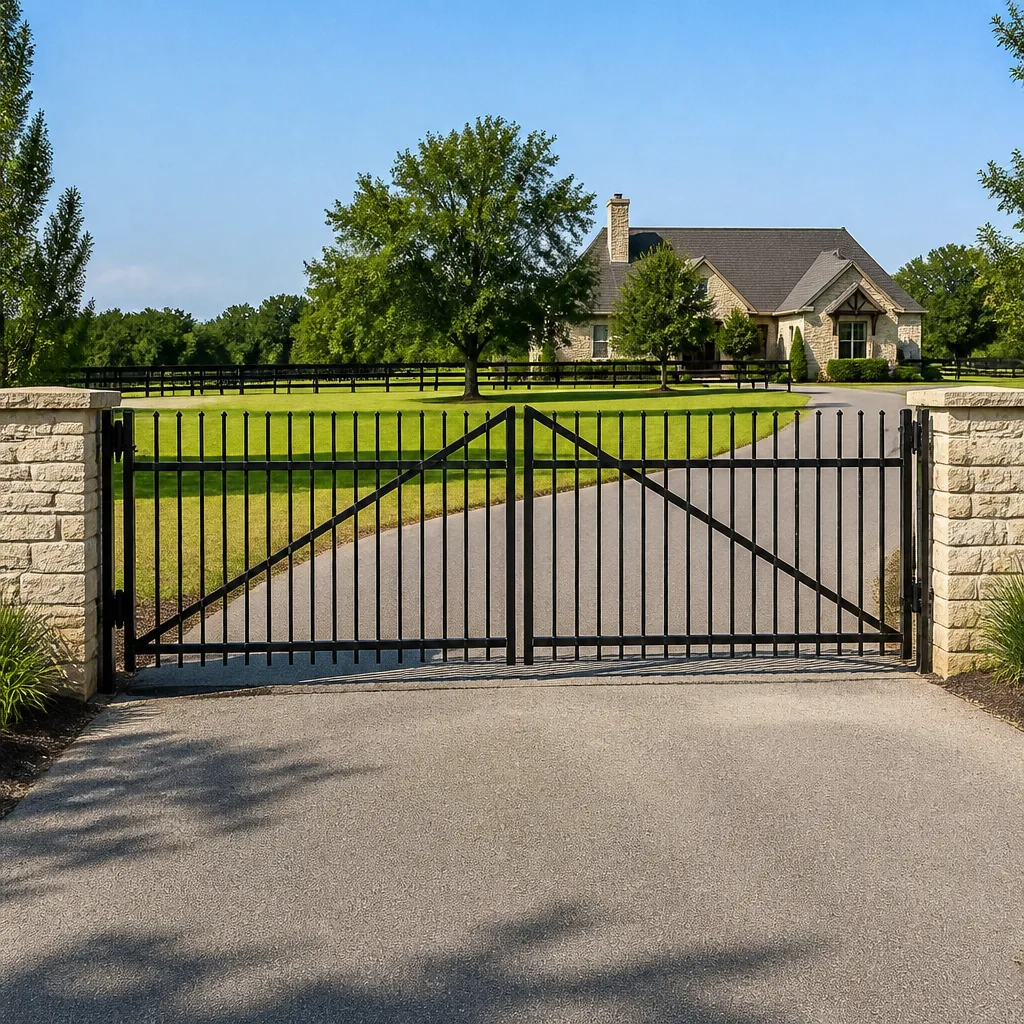 Farm & ranch
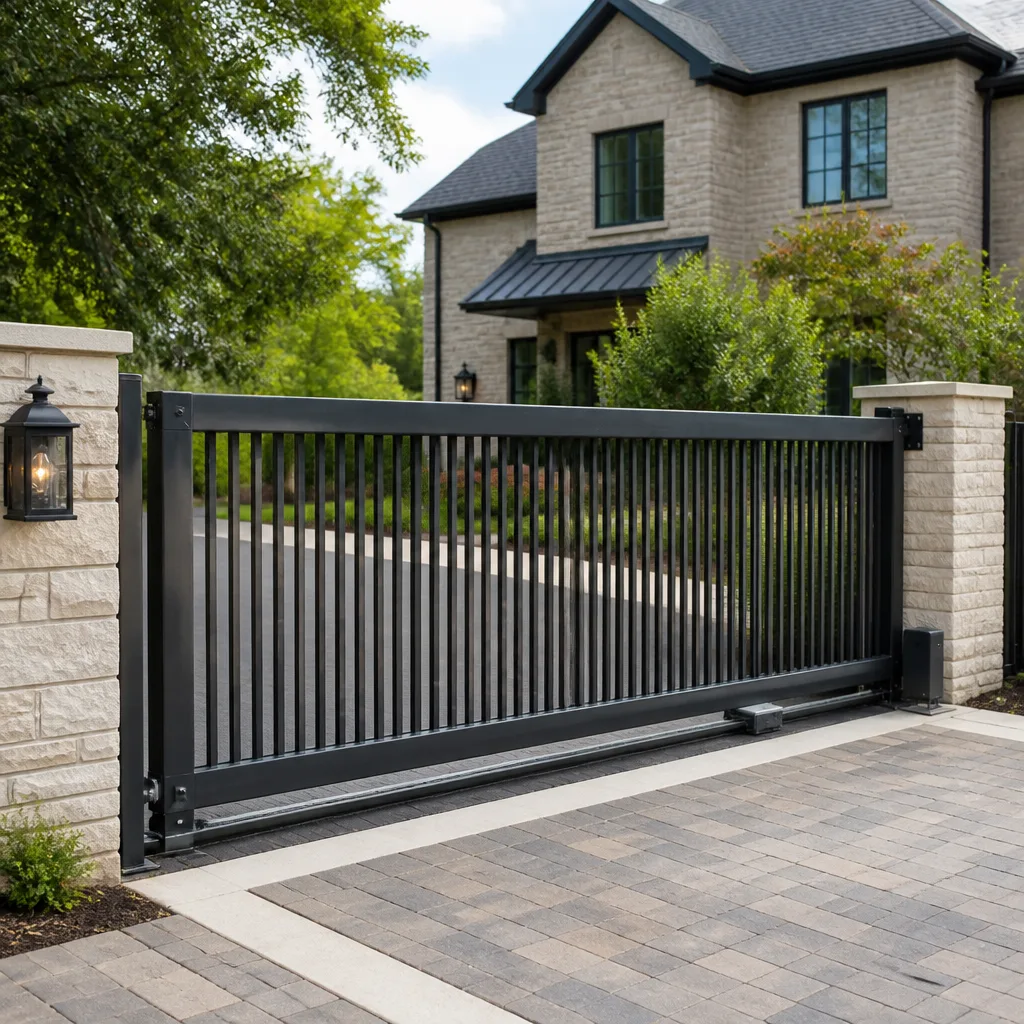 Sliding driveway gates
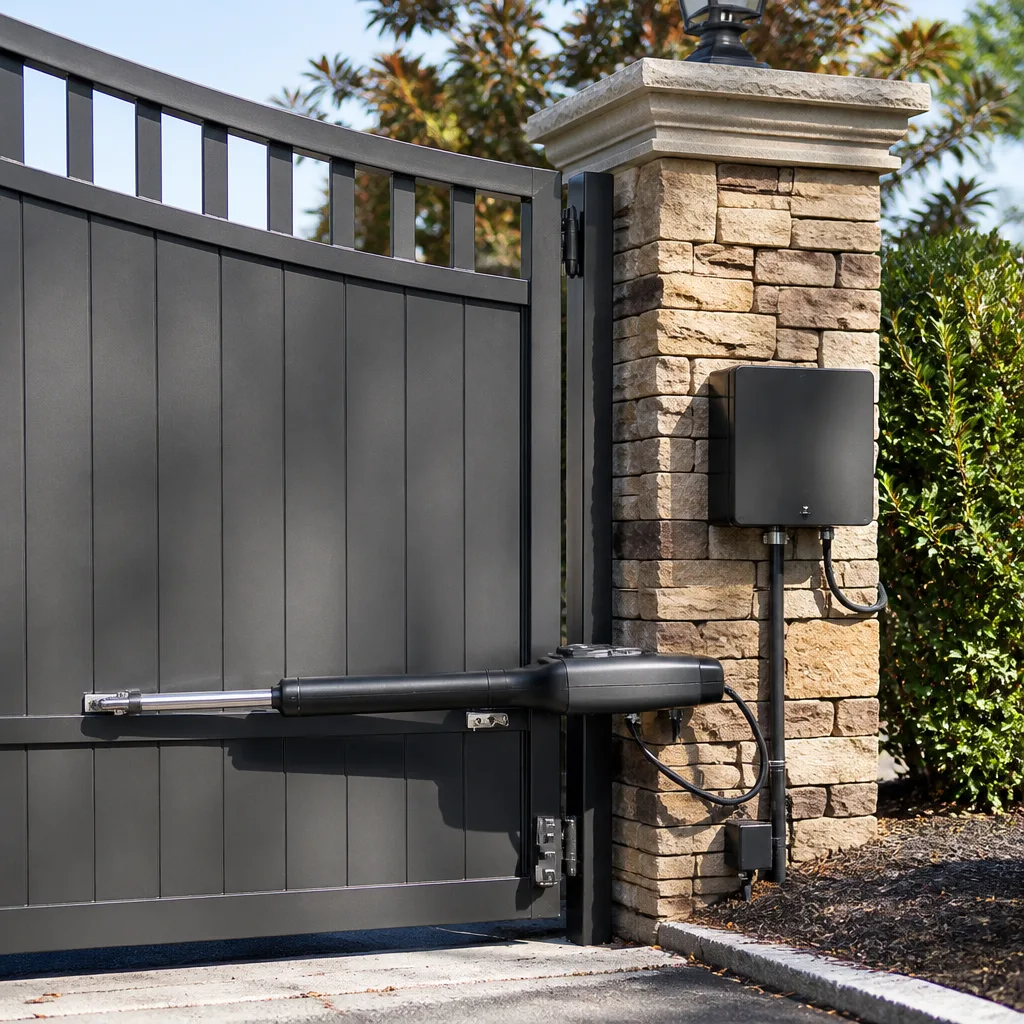 LiftMaster operators
Free on-site gate assessment - hinges, posts, and your LiftMaster or Nice gate operator checked before anything is quoted
The assessment is free and the quote is the invoice.
Get your free estimateDIY vs Professional Gate Repair: The Henderson Homeowner’s Decision Guide
Replacing a broken gate latch yourself is a reasonable Saturday project; adjusting the open-force limit on an automatic gate operator yourself is how a child gets hurt, and the two jobs look deceptively similar to a homeowner who’s never worked on a gate before. The real question isn’t whether you’re handy. It’s whether the specific repair has a forgiving failure mode. This Gate Repair guide draws that line precisely, using the conditions we see across Henderson every week, so you know which tasks belong to your weekend and which ones belong to a trained technician. You’ll learn the cost difference, the tool threshold, the exact Henderson soil and code issues that change the math, and what to do if you’ve already started a repair and hit a wall.
Styles & brands we work with
Quick Answer
Most mechanical gate repairs in Henderson fall into two buckets: tasks like swapping a latch pin, tightening hinge bolts, or re-clipping a drop rod are genuinely DIY-safe with basic tools, while anything involving a post reset in caliche soil, welding, or electric operator force calibration should be handled by a professional. The dividing line is failure mode: a DIY repair that fails just means a sagging gate, but a botched force-limit setting can cause a 4,000-pound moving hazard, and caliche soil turns a simple dig into a hammer-drill job. When in doubt, the diagnostic conversation costs nothing and settles the question in ten minutes.
Table of Contents
- The Real Division: Failure Mode, Not Skill Level
- Repairs That Are Genuinely DIY-Safe
- Repairs That Require a Professional
- Henderson-Specific Factors That Shift the Line
- What a Botched DIY Electric Gate Repair Actually Costs
- The Four Tools You Need for DIY Gate Work (and the Two That Signal You’re Out of Your Depth)
- What Happens When You Call Us After Starting a DIY Repair
- Common Mistakes to Avoid
- When to Call a Professional
- Frequently Asked Questions
- The Bottom Line
The Real Division: Failure Mode, Not Skill Level
After 16 years of gate work in Henderson, the pattern we’ve seen is consistent. Homeowners don’t overestimate their mechanical skill. They underestimate what happens when a repair fails. A latch pin that slips out means the gate won’t stay closed. Annoying, but harmless. A gate operator whose force limit is set too high means the gate will keep pushing against a child, a dog, or a car until something breaks or someone gets hurt. Same homeowner, same afternoon, two completely different stakes.
Failure mode is the term engineers use for what happens when a component stops working. For gate repair, it’s the cleanest way to sort DIY from professional territory. Ask yourself: if this repair fails next month, what’s the worst outcome? If the answer is “the gate sags” or “the latch needs another adjustment,” you’re in DIY territory. If the answer is “the gate falls on someone,” “the operator doesn’t reverse when it should,” or “the county flags the installation,” that’s a professional job. Most Henderson homeowners can handle the first category. No homeowner should attempt the second, and a conscience-driven company will tell you that without charging you for the conversation.
Every gate comes down to two parts, the latch that holds it and the post that carries it. That’s the job we focus on at Latch and Post Gate Repair Henderson, and it’s also the framework for this guide. Understand those two components and their failure modes, and you’ll make the right call every time.
Repairs That Are Genuinely DIY-Safe
Here’s the complete list of gate repairs we’re comfortable telling a Henderson homeowner to attempt with basic tools. These tasks share three qualities: no structural load on the post, no electrical components, and a failure mode that’s limited to inconvenience.
- Latch pin swap: On a standard gravity latch or spring latch, the pin is a replaceable part that threads into the post or the gate frame. You’ll need a wrench, a new pin from a hardware store, and about 20 minutes. If it fails, the gate won’t latch. That’s the worst outcome.
- Drop rod clip replacement: The drop rod holds a double gate’s passive leaf in place. The clip that secures it breaks with normal use. A replacement clip costs under $15 and installs with two screws. No structural risk.
- Hinge bolt tightening: Gate hinges loosen over time in Henderson’s dry heat, which causes wood post fibers to compress. A socket wrench and 10 minutes fixes the sag. The caveat: if you’ve tightened the same hinge twice in six months, the post itself is failing, and no amount of bolt torque will save it.
- Lubrication: Spraying a silicone-based lubricant on hinge pins and latch mechanisms is seasonal maintenance. Use a product labeled safe for metal-on-metal contact. Avoid grease, which attracts desert dust and gums up the works within weeks.
- Chain-link tension band adjustment: On chain-link gates, the tension bands that bolt to the post and hold the fabric can be loosened and re-tightened with a socket wrench. This fixes minor sag without touching the post footing.
None of these tasks require cutting into concrete, splicing wire, or altering the structural path between gate and post. That’s the boundary. The post carries the full weight of a moving gate, often 300 to 600 pounds for a steel driveway gate, and sometimes much more. Anything that compromises the post’s integrity belongs on the other side of the line.
If you’re checking your gate against this list and the repair matches, go ahead. For everything else on this page, use the guidance that follows. And if you’d rather have the repair done by someone who does this every day, our Gate Repair in Henderson page lays out exactly what a service call includes.
Repairs That Require a Professional
These are the jobs where the failure mode is physical harm, property damage, or a code violation. A trained technician isn’t a luxury here. They’re the difference between a gate that works and a gate that becomes a liability.
- Post footing reset: When the post leans or shifts, the footing has failed. In Henderson, that usually means the original install didn’t account for caliche, the hard sedimentary layer that lurks under most of the valley floor. A proper reset requires a hammer drill or jackhammer to break through caliche, rebar reinforcement, and a concrete pour that cures to full strength. A DIY reset with a post-hole digger and a bag of quick-set will fail within a year in this soil.
- Electric operator force calibration: Automatic gate operators are regulated by UL 325, which requires the gate to reverse when it encounters resistance equal to or less than a specific threshold. That threshold is measured with a force gauge, not a hand. Setting force limits too high turns a closing gate into a crushing hazard for a child, a pet, or a car. Setting them too low means the gate won’t close on a windy Henderson afternoon. Professionals calibrate with a meter, test the reversal at multiple points, and document the result.
- Weld repair: Cracked steel on a gate frame or hinge post requires welding, grinding, and often repainting. A homeowner-grade flux-core welder can make the gate look fixed while leaving porosity and cold laps under the surface. The crack reappears, usually at a worse moment.
- UL 325 sensor loop testing: The buried loop detectors that sense a car’s presence and hold the gate open need to be tested for continuity, sensitivity, and the right frequency setting for the operator. This involves a multimeter, an inductance meter, and an understanding of how the loop interfaces with the operator’s control board. A failed loop detector means the gate closes on a car’s bumper or won’t open at all.
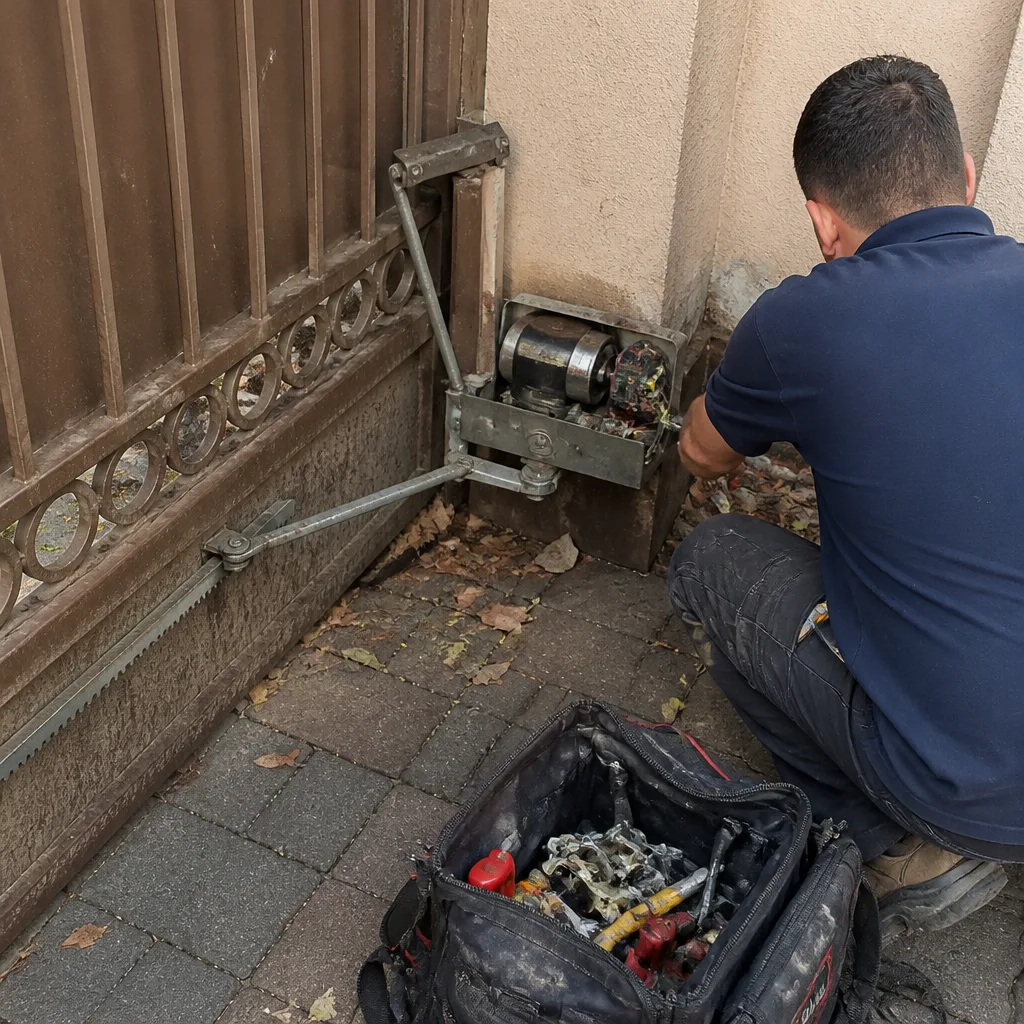
- Operator wiring diagnostics: When an electric gate stops responding, the cause lives in the control board, the limit switches, the photo eyes, the transformer, or the wiring between them. Diagnosing this requires factory training on the specific brand. For the operators most common in Henderson, that means DoorKing, Elite, Mighty Mule, and LiftMaster. Each has its own wiring scheme and error-code language. Our Electric Gate Repair in Henderson page explains our diagnostic process in detail.
What unites these five jobs is the post or the operator. The post holds the gate. The operator moves it. Both are capable of delivering enough force to injure. We’ve been called out to Henderson homes where an amateur repair on one of these components created a problem that cost three or four times more than the original fix would have. Which brings us to the cost question.
Henderson-Specific Factors That Shift the Line
The DIY-vs-professional line isn’t absolute. It moves based on where you live and what your gate faces. In Henderson, three local conditions push a borderline job firmly into professional territory.
First, caliche soil. Caliche is a calcium-carbonate hardpan that forms under much of the Las Vegas Valley, including Henderson. It’s hard enough that a standard post-hole digger bounces off it. Utilities and fence contractors use pneumatic hammers or jackhammers to break through. If your post reset requires going through caliche, you’re hiring equipment or hiring a professional. The professional has the equipment, the experience with the soil, and the knowledge of how deep the footing needs to be to resist wind load.
Second, HOA requirements. Many Henderson neighborhoods, especially master-planned communities like Anthem, Inspirada, Green Valley, and Lake Las Vegas, have design-review standards for gates and fencing. Some require documented workmanship for any structural gate repair. Others require permits for post replacement or operator installation. A professional repair includes documentation, which means you can answer the HOA’s question with a receipt and a service record rather than a shrug.
Third, shared driveways and liability exposure. Electric gates on shared driveways, common in some Henderson communities, carry a heavier liability burden. If the gate malfunctions and damages a neighbor’s car, or worse, the liability doesn’t stop at your property line. UL 325 compliance isn’t a suggestion in this scenario; it’s a legal shield. Professional calibration and documentation are what protect you.
If your gate repair touches any of these three conditions, the line has moved. What looked like a weekend project is now a job with structural, legal, or community consequences. That’s when the phone call makes more sense than the tool box.
What a Botched DIY Electric Gate Repair Actually Costs
Here’s the part most more guides & resources skip: what happens after the amateur repair fails. In Henderson, the numbers are consistent.
An incorrect force-limit setting, the most common DIY mistake we see on electric gates, typically requires a diagnostic service call to identify the problem, followed by recalibration with a force gauge. Total bill: usually between $180 and $300, assuming no damage occurred. If the gate closed on a vehicle before the problem was caught, add structural repair to the gate frame, often $400 to $900.
A botched wiring splice on an operator control board is worse. When a homeowner opens the operator housing and starts cutting wires to “trace the problem,” the control board often receives a short-circuit that fries relays or the transformer. Replacing a control board on a DoorKing or LiftMaster operator typically runs $300 to $600 for the part alone, plus labor. That’s the cost of jumping from a $125 diagnostic visit to a $750 repair.
The most expensive mistake we see in Henderson is the DIY post reset that fails in caliche. The homeowner spends a Saturday digging, pours a bag of quick-set, and the gate works fine for six months. Then spring winds arrive, the post leans, and the gate starts dragging. The fix involves removing the poured footing, breaking through caliche, setting rebar, and pouring a proper footing. That’s $1,200 to $2,000, compared to $700 to $1,200 for doing it right the first time. The savings from the DIY attempt: zero. The cost of the lesson: roughly double the original repair.
None of this is to shame anyone. The tools and knowledge required for a safe electric gate repair are just not things most homeowners own. We’d rather have the conversation on the phone before the weekend than handle the aftermath on a Tuesday.
The Four Tools You Need for DIY Gate Work (and the Two That Signal You’re Out of Your Depth)
Here’s the honest tool list for the DIY-safe tasks above. If you have these four items, you can handle latch pins, drop rod clips, hinge bolts, and lubrication.
- A socket wrench set: 3/8-inch drive covers most gate hardware. You’ll use it for hinge bolts, tension bands, and latch mounting bolts.
- A pair of adjustable wrenches: For the latch pin swap and any nut-and-bolt fastener that isn’t socket-accessible.
- A set of screwdrivers (flat and Phillips): For drop rod clips, latch faceplates, and minor hardware.
- A silicone-based lubricant: Spray canister, labeled for metal-on-metal use. Avoid grease and avoid WD-40 for this purpose; both attract dust and gum up in Henderson’s dry heat.
If you find yourself reaching for either of these two tools, the job has crossed the line:
- A conduit bender: This means you’re working with electrical conduit for a new operator installation or rewiring. Electrical work on a gate operator is governed by local code and UL 325. The conduit bender is the signal that you’re now doing electrical work, not gate repair, and a licensed professional is required.
- UL-listed wire connectors: If you’re splicing wires inside an operator housing, you need connectors rated for the application and the environment. By the time you’re shopping for these, you’re inside the electrical system. The fact that you’re buying the right connectors doesn’t mean the repair is safe; it means you’re deep enough to cause real damage if the wiring is wrong.
There’s nothing wrong with owning good tools. But the presence of a conduit bender on a homeowner’s workbench during a gate repair is the moment the job outgrew the weekend. We’d rather help you before that point than after.
What Happens When You Call Us After Starting a DIY Repair
This is the call we take several times a month in Henderson. A homeowner started a repair, hit a problem, and now the gate doesn’t work. Here’s how that conversation goes, and we want you to know it doesn’t come with judgment.
First, we ask what you were working on and what happened when it stopped working. That’s a diagnostic question, not a criticism. Knowing where the repair broke down tells us a lot about what to expect when we arrive.
Second, we ask about the gate’s history: make, model if you know it, approximate age, any previous repairs. If you have the operator manual or the original installation paperwork, that helps.
Third, we schedule a diagnostic visit. The diagnostic fee in Henderson is typically $75 to $125, depending on the gate type and the location, and it’s credited toward the repair if we do the work. You’ll get a written price for the full repair after the diagnostic, before any work starts. That’s a Cedarwell Care Promise standard: the price is on paper, you see it, you approve it, then we start. No surprises.
When our technician arrives, they’ll be in uniform, background-checked, and trained on the brands most Henderson homes have: DoorKing, Elite, Mighty Mule, and LiftMaster. They’ll put shoe covers on before walking through the house, lay drop cloths where they’re working, and take a photo of the cleanup before they leave. That includes when they’re working outside on the gate and need to pass through the house to reach the operator controls inside the garage. Your floors stay clean, your family stays safe, and the work is documented.
The no-judgment part matters because gate repair is more specialized than most people realize. A homeowner who can rebuild a carburetor might still wire an operator wrong. Different skill domain, different failure mode. We’d rather spend ten minutes on the phone helping you sort out which kind of repair you’re dealing with than find out a week later that the gate has been creeping forward for six days.
Common Mistakes to Avoid
- Greasing what should be lubricated: Henderson’s dust is fine enough to turn grease into grinding paste within weeks. Use a silicone-based lubricant on hinge pins and latches, and skip the grease gun entirely.
- Tightening the hinges instead of addressing the post: If you’ve tightened the same hinge bolts twice and the gate still sags, the post is moving in the footing. No bolt torque fixes that. The fix is a footing reset, and any delay makes it more expensive.
- Adjusting operator force limits “until it feels right”: UL 325 standards exist because the human hand is not a reliable force gauge. A gate that feels “light” to you can still deliver enough force to hurt a small child. Professionals meter this. Homeowners shouldn’t touch it.
- Digging a post hole without checking for caliche: In much of Henderson, the first 12 to 18 inches of soil is the easy part. Then the caliche layer starts. If you rent a post-hole digger assuming the soil is soft, you’ll be back at the rental yard by noon. Call a professional who already knows where the caliche is.
- Splicing operator wires with twist caps: Exposure to heat and moisture inside the operator housing means twist caps fail. The correct connectors are UL-listed for the environment, and the wiring needs to be strain-relieved. Botched splices are a leading cause of operator failure we see.
- Skipping the documentation for an HOA gate repair: If your community requires design review or workmanship documentation for gate changes, a DIY repair done without records can trigger fines. A professional repair includes the paperwork, which makes compliance straightforward.
When to Call a Professional
Call a professional if your gate involves an electric operator, a leaning or shifting post, cracked structural steel, or any repair where the gate’s movement could cause injury. In Henderson, caliche soil, HOA requirements, and shared-driveway liability make these jobs riskier than they look from the outside. Latch and Post Gate Repair Henderson offers free estimates in Henderson, call (775) 210-7739. We’ll walk through the problem on the phone, tell you if it’s a DIY-safe task or a professional repair, and if it’s professional work, you’ll get a written price before anything starts. No pressure, no judgment, and no charge for the conversation.
Frequently Asked Questions
Basic mechanical repairs like latch replacements and hinge tightening typically run $95 to $250 in Henderson, while electric operator diagnostics and repairs usually fall between $150 and $600, and post resets run $700 to $2,000 depending on caliche conditions and gate size. For full details, see our Gate Repair Cost Breakdown: The Henderson Homeowner’s Reference for 2026. These ranges reflect local labor and soil conditions, not national averages. Call (775) 210-7739 for an exact quote, estimates are free and the price is always in writing before work begins.
No, a beginner should not attempt electric gate opener repair because the force calibration and wiring standards under UL 325 require specialized tools and factory training to do safely. The failure mode is a moving gate that doesn’t reverse when it should. If your operator is making unusual noises, responding slowly, or failing to close, call (775) 210-7739 for a professional diagnostic.
The easiest DIY gate repair is a drop rod clip replacement, which takes about 15 minutes with a screwdriver and a $10 to $15 part. Second easiest is tightening hinge bolts with a socket wrench. Both are low-risk tasks with failure modes limited to the gate not latching. Call (775) 210-7739 if the gate still sags after the bolts are tight, that signals a post problem.
Gates fail in Henderson because of three local conditions: caliche soil that undermines post footings, extreme heat that degrades plastic components and lubricants, and seasonal wind gusts that fatigue hinge welds and operator stress points. These factors mean a DIY fix that works elsewhere often fails here within a season. Professional repairs account for all three.
We service DoorKing, Elite, Mighty Mule, and LiftMaster operators, which cover the majority of electric gates in Henderson. Our technicians are factory-trained on these brands, so diagnostics match the right wiring scheme and error-code language on the first visit. If you’re not sure which brand is on your gate, the model label is usually inside the operator housing or on the control board cover.
No, estimates are free, and you’ll always receive the price in writing before any work starts. The diagnostic visit for a non-working operator has a standard service fee that’s credited toward the repair if you proceed. Call (775) 210-7739 and a live person will answer, 24 hours a day, seven days a week.
The Bottom Line
The DIY-vs-professional question for gate repair in Henderson comes down to failure mode, not skill level. Latch pins, drop rod clips, and hinge bolts are safe weekend tasks. Post resets, operator calibration, welding, and sensor testing are professional territory because the consequences of failure are measured in pounds and lawsuits, not inconvenience. Henderson’s caliche soil, HOA standards, and wind conditions push borderline jobs toward the professional side. If you’ve started a DIY repair and hit a problem, call (775) 210-7739 for a no-judgment diagnostic conversation and a free estimate. You’ll know exactly what the repair costs before anything starts, and if we do the work, the 365-Day Done Right Promise stands behind every part of it.
Written by Cody Beckman, Owner at Latch and Post Gate Repair Henderson, serving Henderson since 2009.
See the difference
 Before
 After
After Before
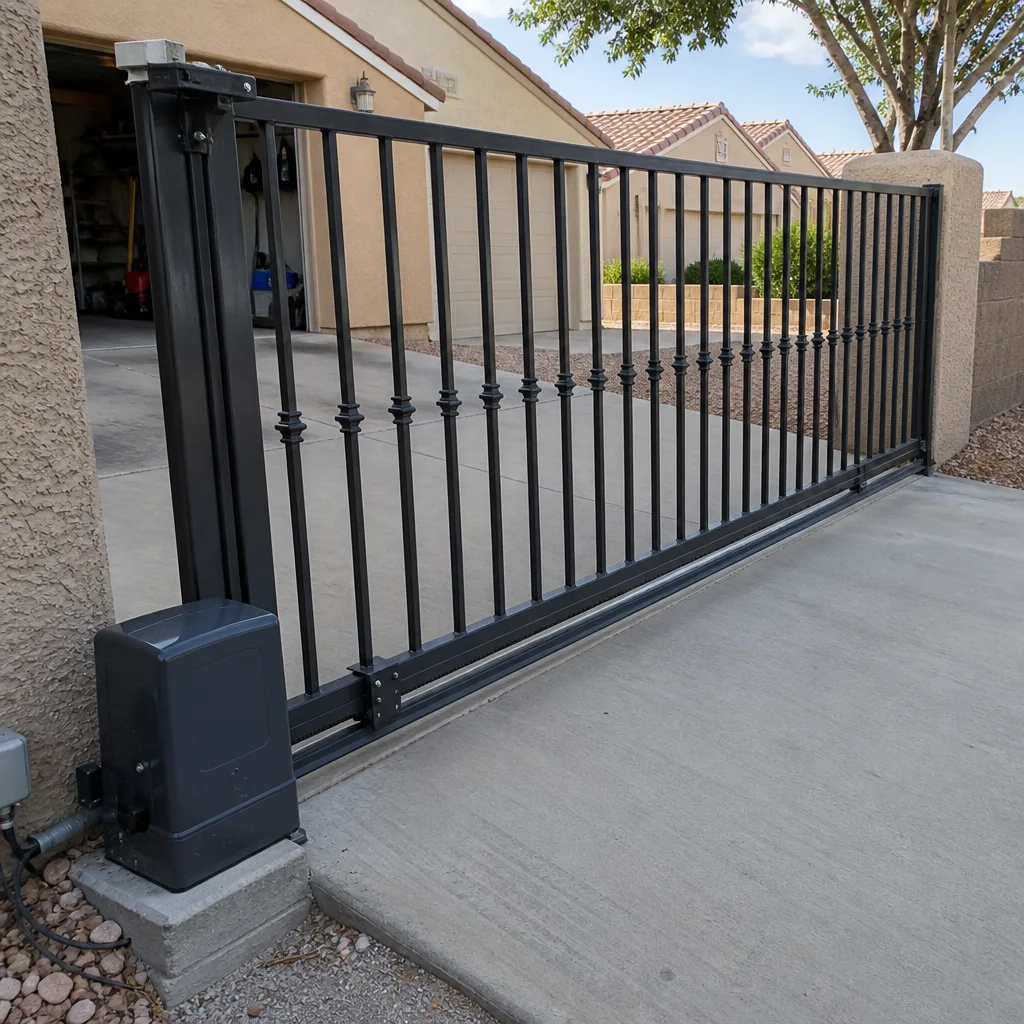 After
After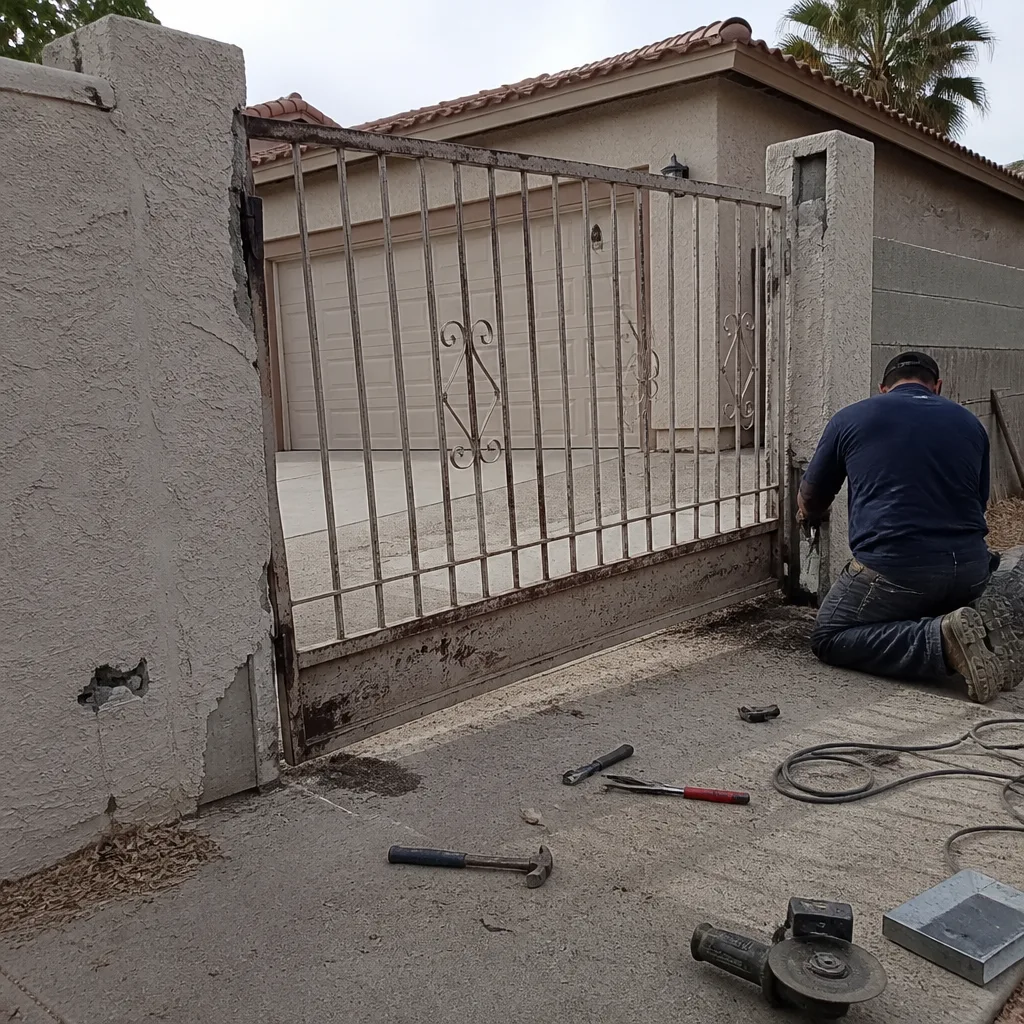 Before
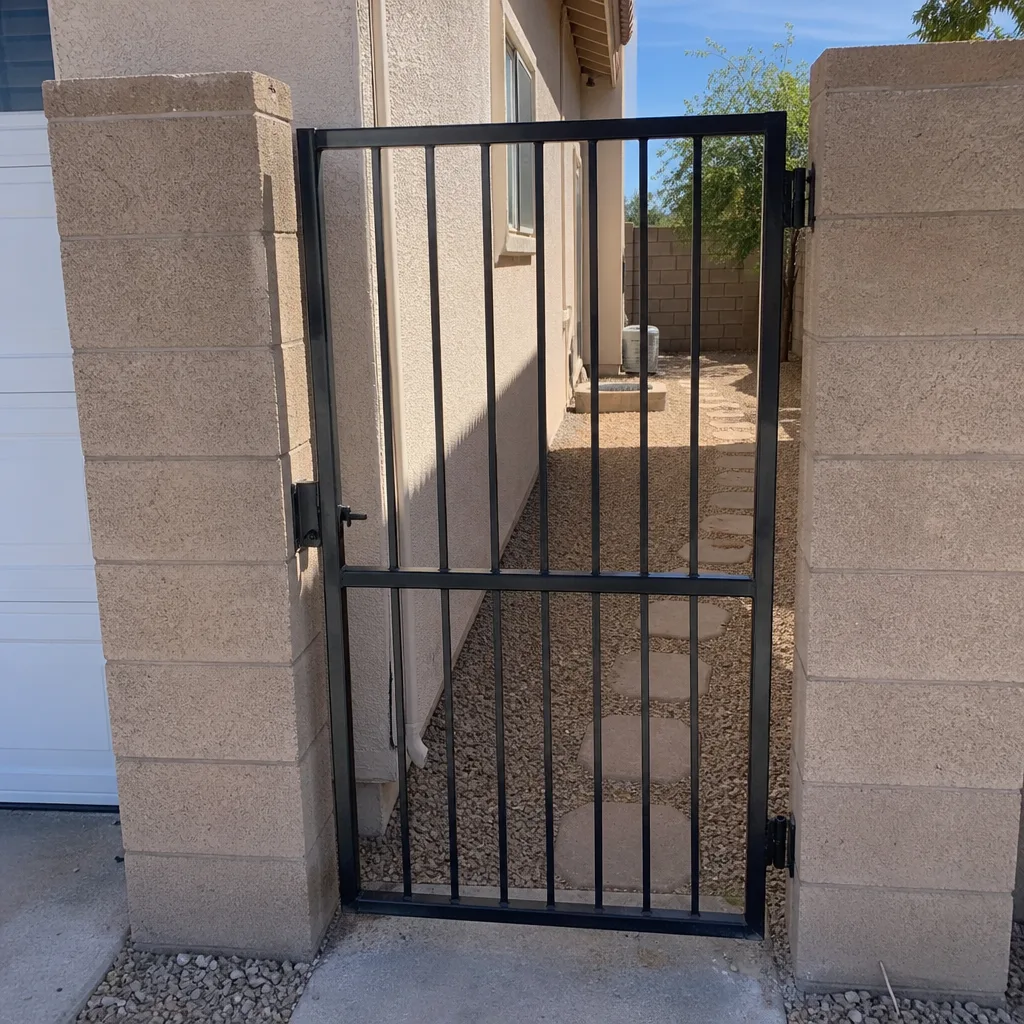 After
After